When the Crowd Becomes the Game: How Competitive Betting Platforms Are Rewriting the Rules of Online Entertainment
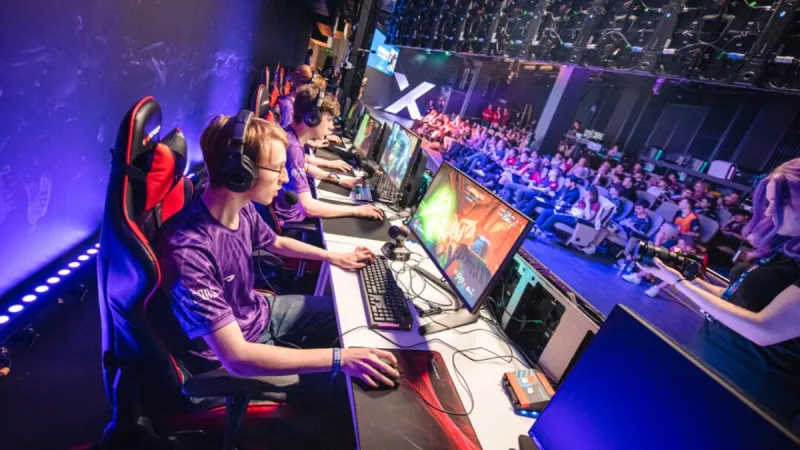
Photo: esports tournament crowd live gaming competition leaderboard, via www.markarina.com
For a long time, online gaming meant you and a screen. Maybe some background music, a chat window nobody really used, and the quiet hum of a random number generator deciding your fate. Functional? Sure. But exciting in the way that watching paint dry is exciting.
That version of online gaming is getting disrupted fast — and the disruption looks a lot like a stadium.
From Solo Sessions to Shared Arenas
The numbers tell a compelling story. According to data from the American Gaming Association, online gambling revenue in the US crossed $7 billion in 2023, with interactive and live-format products growing at nearly double the rate of traditional digital slots. Meanwhile, the esports industry — tournament gaming with live audiences and real-time leaderboards — is projected to surpass $1.8 billion globally in 2024.
Somewhere in the overlap between those two curves, something new is being built.
Platforms are increasingly launching what the industry is calling "competitive betting experiences" — formats that borrow the social architecture of esports and layer it on top of traditional casino and sports wagering. Think live leaderboards during NFL Sunday action, head-to-head prediction tournaments with bracket-style elimination, or poker-style casino competitions where you're not just playing the house — you're playing a room full of real people from across the country.
The core insight driving all of it is simple: people don't just want to win. They want to win in front of someone.
The Technology Making It Possible
None of this would work without some serious infrastructure upgrades happening quietly in the background. Real-time competitive gaming at scale requires low-latency data feeds, live synchronization across thousands of simultaneous users, and UI design that can surface complex leaderboard information without turning into a cluttered mess.
Several platforms have started deploying WebSocket-based architecture — the same technology that powers live stock trading dashboards — to push real-time updates to players without requiring page refreshes. The result is a betting interface that pulses and shifts like a live scoreboard, not a static webpage.
Live dealer technology has also taken a significant leap. The newest generation of live casino studios aren't just streaming a card game — they're building interactive broadcast experiences complete with player stats overlays, real-time reaction feeds, and community polls. Some studios have invested in full broadcast-quality production setups that wouldn't look out of place on ESPN2.
For US players accustomed to the production values of NFL broadcasts and NBA League Pass, the bar is high. The platforms clearing it are seeing serious engagement numbers.
Why American Players Are Gravitating Toward Community-Driven Play
There's a cultural dimension to this shift that's easy to underestimate. American sports culture has always been communal. The tailgate, the sports bar, the office bracket pool — these aren't just about the game. They're about shared stakes and shared reactions. The joy of winning is amplified when someone else sees it. The sting of losing is softened when everyone around you just took the same hit.
Traditional online gambling stripped that context away entirely. You were alone with your result, win or lose.
Competitive platforms are rebuilding that social scaffolding in digital form. Live chat during tournaments, public leaderboards that show your rank among hundreds of players, achievement systems that let you flex a winning streak — these features tap into the same social reward circuits that made fantasy football a $9 billion industry.
Jason M., a 34-year-old from Atlanta who describes himself as a "casual bettor turned tournament regular," explained the appeal this way: "I've been doing NFL picks for years with my buddies in a group chat. When I found a platform running weekly pick'em tournaments with live standings, it felt like that — but bigger. There are hundreds of people in the same tournament. Watching yourself climb the board during Sunday games is genuinely addictive."
The Esports Influence Is Deeper Than You Think
It's worth being specific about what the esports industry has actually contributed to this evolution beyond aesthetics. The structural innovations are significant.
Esports normalized the idea of watching skilled players compete in real time as entertainment in its own right. It built audiences comfortable with complex information displays, multi-stream viewing, and community interaction during live events. It also pioneered tiered competition formats — open qualifiers feeding into invite-only finals — that create entry points for casual participants while still rewarding elite performance.
All of those structural innovations are showing up in the next generation of betting platforms. Some operators are running open weekly tournaments with free or low-cost entry that feed into monthly championship events with serious prize pools. The format creates a competitive ladder that keeps players engaged week over week, not just for individual sessions.
For platforms like Jun88 Arena, where the ethos is built around bold play and big wins, the tournament model aligns naturally. It's not just about whether you hit on a single bet. It's about whether you can string together a performance over an entire event — and whether you can do it better than everyone else in the arena.
What This Means for the Future of Online Gaming
The honest answer is that nobody knows exactly where this ends up. The convergence of casino gaming, sports betting, and esports-style competition is still early-stage, and regulatory frameworks in the US are still catching up with the pace of platform innovation.
What seems clear is the direction of travel. Players — especially younger American players who grew up watching Twitch streams and filling out March Madness brackets — expect their gaming experiences to be social, competitive, and visually dynamic. The platforms that deliver on all three are going to win the engagement battle.
The ones that don't will feel, increasingly, like playing alone in a quiet room.
For anyone who's been watching the online gaming space from the sidelines, 2024 might be the year to step into the arena. The crowd's already there.