Dead Even and Dangerous: The Psychology of Playing Bold When the Score Is Tied
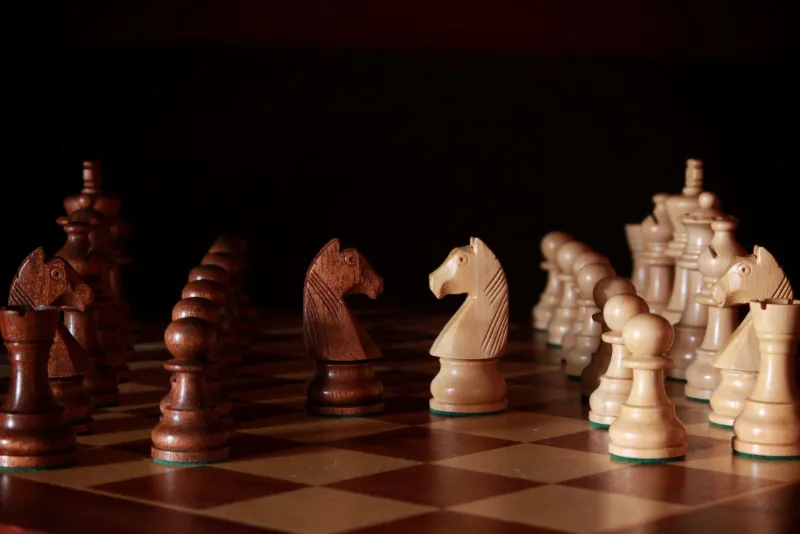
There's a specific kind of electricity that crackles through a game when everything is perfectly balanced. Same chip count. Same score on the board. Same amount of skin in the game. Most players feel it as tension — a knot in the chest, a dry mouth, a finger hovering over the bet button a half-second longer than usual.
What's actually happening inside your head in that moment? And more importantly, how do the smartest players in any arena — sportsbook, poker table, or casino floor — use that moment to pull ahead instead of freeze up?
The Neuroscience of the Dead Heat
When you're tied with a rival, your brain doesn't process it the same way it processes being ahead or behind. Researchers studying competitive decision-making have found that symmetrical competition — where both parties are essentially equal — triggers a distinct neurological response that blends threat detection with opportunity recognition.
In plain terms: your brain reads a tie as both danger and a green light simultaneously.
The amygdala, which handles emotional responses including fear, fires up because the situation is genuinely uncertain. But the prefrontal cortex — the part responsible for calculated risk-taking and reward anticipation — also kicks into overdrive. The result is a state of heightened alertness that neuroscientists sometimes describe as "competitive arousal." Your heart rate climbs, your focus narrows, and your tolerance for risk quietly expands.
This is why tied games produce some of the most dramatic momentum swings in sports. It's also why a poker player who's been grinding conservatively all night will suddenly shove all-in the moment their stack matches their opponent's. The brain interprets perfect equality as a decision point — and it pushes you to act.
Competitive Mirroring: When You Start Playing Like Your Opponent
One of the more fascinating psychological phenomena that emerges in dead-even competition is something called competitive mirroring. When your opponent matches your bet, your score, or your position exactly, there's a subconscious pull to mirror their behavior right back.
Think about how this plays out in sports betting. You've got a line on the Chiefs at -110. Your buddy takes the same bet. You're locked in together, same stake, same risk. Suddenly the next game comes around, and you find yourself sizing your bet to match theirs — not because the value necessarily changed, but because the psychological dynamic of parity is steering your hand.
Or consider a blackjack session where you and the player next to you have been trading wins and losses all night, ending up at almost identical stack sizes. Research into competitive behavior suggests that in this kind of mirrored situation, players are significantly more likely to make aggressive moves — doubling down in marginal spots, splitting pairs they'd normally leave alone — because the presence of an equal rival reframes the risk-reward calculation.
The mirroring effect is real, it's powerful, and left unexamined, it makes your decisions for you.
Fight-or-Flight Meets Calculated Risk
Here's where it gets genuinely useful for serious bettors. The fight-or-flight response that a tied situation triggers isn't inherently bad — it's raw energy. The question is whether you channel it or get swept away by it.
Elite competitors across every discipline — from NFL quarterbacks managing two-minute drills to professional poker players navigating a final table bubble — have learned to recognize the feeling of competitive arousal and treat it as information rather than instruction. The adrenaline spike is telling you the stakes are real and the moment matters. It is not telling you what to do next.
The players who consistently pull ahead from tied positions do a few things differently:
They pause before acting. Even a three-second deliberate pause disrupts the automatic behavioral cascade that competitive pressure triggers. It's enough time to shift from reactive to analytical.
They reframe the situation. Instead of "I'm tied and I need to break away," the internal narrative becomes "I'm in a neutral position with full options available." That reframe dials down the urgency and opens up clearer thinking.
They exploit their opponent's arousal, not their own. If you know that tied situations make people bolder, you can anticipate that your rival is feeling the same pressure — and potentially making decisions that are slightly too aggressive. Patience in those moments can be a weapon.
How This Plays Out at Jun88 Arena
At Jun88 Arena, you're going to encounter tied situations constantly — whether you're tracking a game where both teams are knotted in the fourth quarter, playing a live dealer hand where the pot is split, or watching a head-to-head betting challenge where you and another player are sitting at identical profit margins.
Each of those moments is a psychological test wearing the costume of a strategic decision.
The sports betting environment is especially rich with these inflection points. A game tied at halftime doesn't just mean the score is even — it means the entire narrative of the match is up for grabs, and the live betting lines are going to shift in real time as both teams and both fanbases recalibrate. Savvy bettors who understand the psychology of tied competition can read those line movements more accurately because they understand what's driving them: mass competitive arousal among the betting public pushing money in predictable directions.
When the crowd panics or over-adjusts, that's where value lives.
Training Yourself to Thrive in the Dead Heat
You can actually practice handling tied situations better — and it doesn't require a sports psychologist on retainer.
Start by identifying your personal tell when competitive pressure ramps up. Do you bet bigger? Do you chase a specific outcome more aggressively? Do you abandon your pre-game research and go purely on feel? Most bettors have a pattern, and tied situations are when those patterns show up loudest.
Once you know your tell, you can build a simple decision rule around it. Something like: If I'm feeling the urge to increase my bet significantly during a tied game, I'll wait one full minute and reassess. That's not a strategy — it's a circuit breaker. And circuit breakers are what separate disciplined bettors from emotional ones.
The second practice is studying your results specifically in tied or near-tied situations. Pull your betting history and filter for games that were within a possession or two at halftime, or hands where you were at a symmetrical chip count. Do you perform better or worse than your overall average? Most players are surprised by what they find.
The Edge Is in the Pause
Dead-even competition is one of the most psychologically loaded states in any form of gaming or wagering. The science is clear: your brain becomes bolder, your risk tolerance expands, and your behavior starts mirroring your opponent's whether you intend it to or not.
That's not a weakness to be ashamed of — it's a human wiring that every competitor on the planet shares. The players who win from tied positions aren't immune to the pressure. They've just learned to recognize the feeling, name it, and use it rather than be used by it.
Next time you're locked even with a rival at Jun88 Arena — same score, same chips, same bet on the line — remember: that electricity you're feeling is potential energy. The only question is which direction you aim it.