Eyes on You: How Playing in Public Changes Your Game — and Why That's Actually a Good Thing

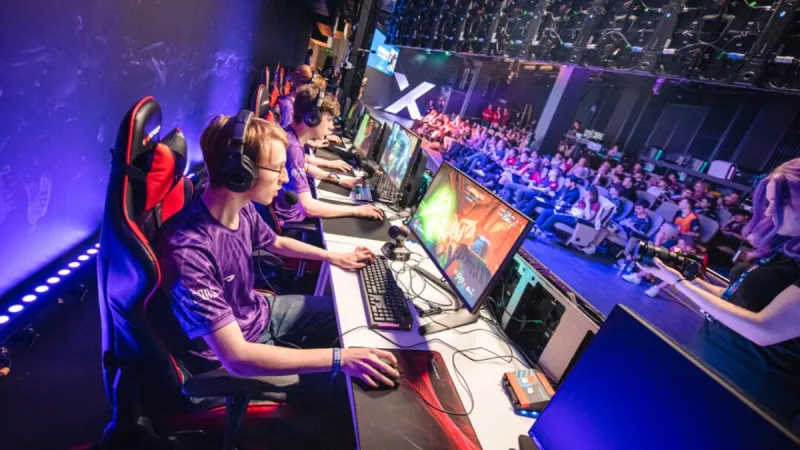
Photo: online gaming leaderboard community tournament competitive players watching screen, via www.inspireandrise.com
There's a moment in any competitive environment — whether you're at a poker table in Vegas, shooting free throws in the driveway while the neighborhood watches, or sitting at the top of a leaderboard with your name visible to a few hundred other players — where the game stops being purely about you versus the odds. Suddenly, it's about you versus the audience.
Most people assume that pressure is bad. That being watched leads to choke jobs, overthinking, and blown opportunities. And sometimes, sure, it does. But the research tells a more complicated — and honestly more interesting — story.
The Audience Effect: A Quick Neuroscience Primer
Back in 1965, a psychologist named Robert Zajonc proposed something called Social Facilitation Theory. The short version: the presence of an audience increases arousal, and that heightened arousal tends to improve performance on well-practiced tasks while hurting performance on unfamiliar ones.
Decades of follow-up research have refined this, but the core finding holds up. When you're doing something you're genuinely skilled at, an audience can push you to perform better. Your focus sharpens. You become more deliberate. You care more about the outcome — not just financially, but socially.
Now apply that to online gaming. For most of the industry's history, players have sat alone in front of a screen with zero social stakes. Win or lose, nobody saw it. No accountability. No community context. Just you, the algorithm, and your credit card.
That setup has a hidden cost.
Accountability Is an Edge Most Bettors Ignore
Here's something worth sitting with: a significant chunk of bad betting decisions happen precisely because nobody's watching. Chasing a loss at 1 AM when you're down three units and irritated? Easy to do when it's invisible. Abandoning your pre-game research because you "have a feeling" about a late line? Nobody will know.
Public-facing gaming environments change this calculus. When your results are visible — even partially, even just to a leaderboard or a social feed — you introduce a layer of social accountability that functions like a behavioral guardrail. You're more likely to stick to your process. You're less likely to make decisions you'd be embarrassed to explain.
This isn't speculation. Studies on public commitment in decision-making consistently show that people who announce their choices or make them visible to peers are more likely to follow through on them and more likely to make choices they can defend rationally. In betting terms, that translates to tighter discipline and fewer impulsive plays.
When the Crowd Amplifies Performance (And When It Doesn't)
Not every player responds to audience pressure the same way, and that's worth being honest about. For newer bettors or players who are still learning a game's mechanics, public visibility can trigger anxiety that disrupts performance. This is the "choking under pressure" phenomenon, and it's real.
The key variable is competence. The audience effect is a multiplier — it amplifies whatever foundation you're already working from. If your foundation is shaky, the pressure exposes it. If your foundation is solid, the pressure elevates your game.
This is actually one of the strongest arguments for engaging with community platforms early in your betting development, not after you've already figured everything out. Leaderboards and social feeds give you real-time feedback about where you stand relative to other players. That's information you simply don't get when you're playing in isolation.
What Jun88 Arena's Model Gets Right
Jun88 Arena's approach to community-driven play isn't just a feature — it's a design philosophy built around this exact dynamic. The platform's transparent, public-facing structure means your wins are visible, your streaks are trackable, and you're playing in a shared environment rather than a sealed-off solo experience.
Leaderboards create benchmarks. When you can see that other players are operating at a higher level than you — making sharper calls, managing their action more efficiently — it gives you something concrete to aim at. That's motivating in a way that a purely private win-rate tracker never can be.
Live tournaments add another layer. In a tournament format, every decision carries social weight. You're not just managing your own expectations — you're aware that your choices are unfolding in real time against real opponents. That awareness tends to produce more thoughtful, deliberate play. Fewer impulse bets. More adherence to strategy.
And social feeds — the ability to see what other players are doing, how they're approaching games, what they're watching and wagering on — create a community knowledge base that solo platforms simply can't replicate. You pick up on trends. You spot when the public is loading up on one side of a bet. You learn from watching, not just from playing.
The Hidden Benefit: You Start Playing to Your Strengths
One of the more subtle effects of public gaming environments is that players naturally gravitate toward their areas of genuine competence. When your results are visible, you have less incentive to dabble in games or bet types where you don't actually have an edge. The social accountability pushes you toward specialization.
A bettor who's genuinely sharp on NBA totals but mediocre at NFL spreads will, over time, spend more of their action in their strong suit when they're playing publicly. That's not ego — it's rational self-selection driven by the knowledge that your record is being watched.
In contrast, the solo player has no such feedback loop. They scatter action across a dozen different bet types with no real data on where their edge actually lives.
Play Bold. Play in the Open.
The old image of the lone gambler — isolated, secretive, working some private angle — is increasingly out of step with how high-performing bettors actually operate. The best players in competitive environments aren't hiding. They're engaging, learning, competing, and using the visibility of the arena as a tool rather than a threat.
At Jun88 Arena, the name isn't accidental. An arena is a public space. It's a place where performance is witnessed, where results matter beyond the individual, and where the energy of a crowd — watching, competing, responding — is part of what makes the game worth playing.
If you've been grinding in isolation and wondering why your results feel flat, consider what changes when you step into the light. The audience isn't your enemy. More often than not, it's the push you didn't know you needed.