Down But Not Done: The Mental Blueprint Elite Players Use to Flip a Deficit Into a Win

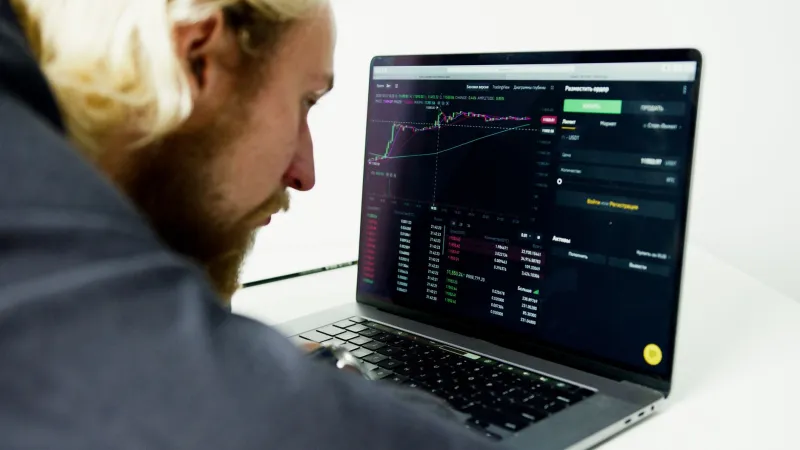
Photo by Photo by Chris Liverani on Unsplash on Unsplash
There's a specific kind of silence that hits when you realize you're losing. Not just trailing by a little — genuinely, uncomfortably behind. Your bankroll is shrinking, your reads feel off, and every decision you've made in the last hour seems to be staring back at you like a bad receipt.
Most players at that moment make the same mistake: they stop playing their game and start playing the deficit.
The elite ones? They do something different. And it's not magic — it's a system.
Why the Brain Goes Sideways When You're Down
Neuroscience has a lot to say about how humans behave when they're losing. Research on what's called the "motivational intensity theory" shows that people respond to deficits in one of two ways: they either narrow their focus and sharpen their execution, or they blow up their strategy trying to recover too fast.
The determining factor isn't talent. It's how they interpret the deficit.
When you frame being down as a threat — I'm losing, I need to stop the bleeding — your brain kicks into a defensive mode that actually impairs decision-making. You start avoiding risk even when calculated risk is exactly what the situation calls for. You get conservative at precisely the wrong time.
But when you reframe the deficit as a challenge — I'm behind, and here's what I need to do differently — the brain shifts into a mode that research associates with improved focus, better working memory, and more creative problem-solving. You play sharper. You play bolder. You play smarter.
The difference between those two responses? About three seconds of deliberate mental reframing.
The Pattern That Shows Up in Competitive Betting Data
If you watch how players behave on competitive platforms like Jun88 Arena during extended losing stretches, a clear pattern emerges. There are two distinct behavioral clusters.
The first group starts chasing. They increase bet sizes erratically, jump between games or markets looking for a quick score, and make decisions faster — not because they've found clarity, but because sitting with the discomfort has become unbearable. Speed becomes a substitute for strategy.
The second group does something counterintuitive: they slow down. Not in a passive, giving-up way — but deliberately. They reassess. They tighten their focus to one or two high-conviction plays. They treat the deficit as diagnostic information rather than as an indictment of their ability.
Guess which group tends to recover more consistently?
The second group isn't just emotionally steadier. They're tactically better positioned, because they haven't burned through their bankroll chasing ghosts. They still have ammunition when the right opportunity shows up.
The Comeback Framework: Three Moves That Actually Work
So what does a structured comeback actually look like in practice? Elite players — whether they're grinding sports bets or working the casino floor — tend to operate with something close to this framework.
Step one: Stop the bleeding, literally. Before you do anything else, stop placing bets. Not forever — just long enough to take inventory. What's your actual position? How much runway do you have? What decisions led here, and which ones were bad luck versus bad judgment? This pause isn't weakness. It's triage.
Step two: Shrink your universe. One of the most common mistakes in a deficit scenario is trying to recover across too many fronts at once. Five simultaneous bets don't give you five chances to recover — they give you five chances to compound the damage. Elite players narrow their focus to the bet type or game format where they have the clearest edge, then go deep on that one lane.
Step three: Redefine what winning looks like — right now. This is the psychological move that separates the best from everyone else. Instead of fixating on getting back to even or hitting some arbitrary profit target, the goal becomes executing one solid decision. Just one. Not winning the session. Not recovering everything. One good decision, made clearly, without emotion distorting the math.
That shift in target changes everything. Because now you're not playing against the deficit — you're playing your game again.
The NFL Comeback Mindset and What Bettors Can Steal From It
American sports culture is loaded with comeback narratives, and there's a reason they resonate so deeply. The 2017 Super Bowl. Any given Sunday in the NFL when a team down 17 points at halftime walks out of the tunnel with a completely different energy.
What coaches consistently say about those moments isn't that the team suddenly got better players. It's that the team stopped playing the scoreboard and started playing the next play.
That's not a cliché. It's a genuine cognitive shift — from outcome focus to process focus — and it's backed by sports psychology research going back decades. When athletes (and bettors) fixate on the gap between where they are and where they want to be, they perform worse. When they return their attention to the immediate task in front of them, execution improves measurably.
At Jun88 Arena, where live betting and real-time dynamics create constant swings, this mindset isn't optional. It's the whole game.
Building Your Own Deficit Protocol
The best time to figure out how you'll handle being down is before it happens. Seriously — don't wait until you're three losses deep and your judgment is already compromised to start building your comeback playbook.
Write it down. Decide in advance: at what point do you pause and reassess? What's your single-focus bet type when you need to rebuild? What does "one good decision" look like for you specifically?
Players who have this protocol mapped out in advance don't just recover faster from deficits — they're also less rattled when deficits happen, because they have a plan. The plan itself reduces the emotional spike. And reducing the emotional spike is half the battle.
The Real Edge Is Between Your Ears
Here's the honest truth about comebacks: the platform doesn't change, the odds don't tilt in your favor because you're behind, and the cards don't care about your feelings. What changes — what can change — is how efficiently your brain processes the situation and how disciplined your response is.
The players who thrive at Jun88 Arena in deficit conditions aren't luckier than everyone else. They've just done the unglamorous work of understanding how their own psychology reacts under pressure, and they've built habits that override the worst impulses.
Being down isn't a verdict. It's a situation. And situations can be worked.
Play bold. Play smart. And when you're behind — play your game, not the scoreboard.