When Every Sport Is On at Once: Navigating the Chaos of Overlapping Championships
The Sports Calendar's Most Dangerous Weeks
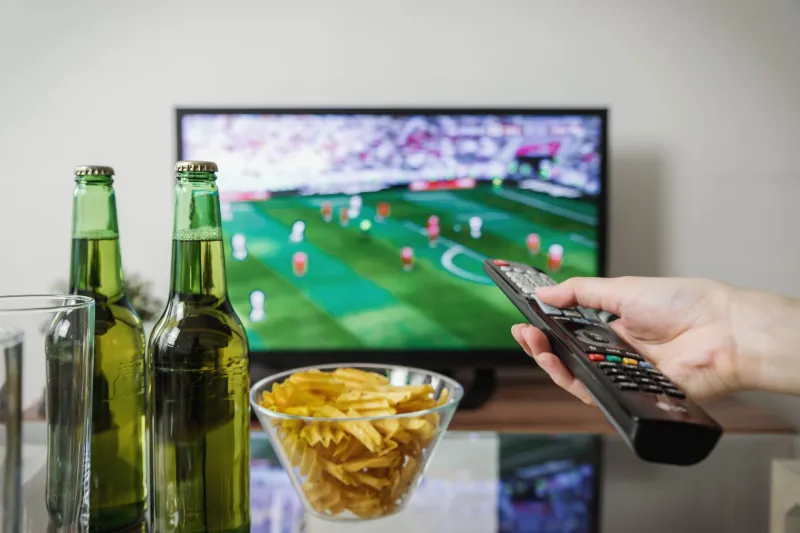
There's a stretch every spring and early summer when the US sports calendar becomes almost absurdly loaded. NBA playoff games running deep into the night. Stanley Cup Finals going to Game 7. MLB in full swing with 12 games on the board. Maybe a major golf tournament wrapping up on Sunday. And somewhere in the background, Champions League soccer and the beginning of international soccer tournaments are pulling global attention.
For casual fans, it's heaven. For bettors, it's a minefield.
The convergence of multiple major sporting events creates conditions that are genuinely unlike any other time of year — and most bettors aren't prepared for what that actually does to their decision-making, their bankroll, or the markets themselves.
How Simultaneous Events Distort the Lines
Sportsbooks are sophisticated operations, but they're not immune to the dynamics of overlapping attention. When multiple high-profile events are running concurrently, betting volume gets fragmented across markets. And fragmented volume means some markets are less efficiently priced than they would be if they had the full spotlight.
This is especially true for lower-profile simultaneous events. When everyone's attention is locked on a Game 7 NBA playoff matchup, the books may be less sharp on a mid-week Stanley Cup game happening at the same time — simply because the sharp money is concentrated elsewhere. Conversely, the high-visibility games attract so much action that the lines get extremely efficient, very quickly. The crowd wisdom effect is powerful when the crowd is enormous.
The practical implication: during peak overlap weeks, the best value often isn't in the game everyone is watching. It's in the game that's getting crowded out.
That's counterintuitive, because human psychology pulls us toward the big moment. We want to be part of the action that matters. But wanting to be part of something and finding value in something are two very different motivations — and confusing them is expensive.
The Illusion of Independent Outcomes
Here's a cognitive trap that catches even experienced bettors: when multiple events are happening simultaneously, our brains start constructing narratives that link them together. A bad beat on the NBA game bleeds into how we evaluate the hockey bet. A win on the golf prop makes us feel invincible going into the late MLB card.
These events are statistically independent. What happens in one has zero bearing on the probability of outcomes in another. But emotionally, we process them as connected — as part of a single session's narrative arc.
This is called the gambler's fallacy in its classic form, but the multi-sport version is subtler and more insidious. It's not just "I'm due for a win" after a loss. It's a comprehensive emotional contamination where your confidence, risk tolerance, and focus are all being influenced by the cumulative results of bets that have nothing to do with each other.
The fix isn't to stop caring about outcomes — that's not realistic. It's to build deliberate mental compartmentalization into your multi-sport sessions. More on that in a moment.
Attention Fragmentation: The Hidden Cost of Watching Multiple Games
Human attention is a finite resource. When you're actively tracking two or three live events simultaneously, you're not giving each one half or a third of your focus — you're giving each one a fraction of your best focus, because split attention degrades the quality of cognitive processing across the board.
Research in cognitive psychology consistently shows that task-switching — rapidly moving attention between different inputs — reduces performance on each individual task compared to focused single-tasking. For bettors, this means your live reads, your line evaluation, and your in-play decision-making are all operating below their peak capacity when you're managing multiple simultaneous events.
You might not notice it in the moment. The games are exciting, the action is constant, and the adrenaline masks the degradation. But look back at your bet log from a heavy multi-sport day and compare the quality of those decisions to a focused single-sport session. The pattern usually tells a story.
How the Sharps Manage It
Professional and high-volume bettors who operate during overlap weeks use systems — not willpower — to maintain decision quality.
The most common approach is tiering. Before the session starts, they rank their bets by confidence level and assign each one to a tier: primary focus, secondary, and informational (meaning they're watching but not actively betting). This creates a hierarchy that prevents the attention fragmentation problem from spreading equally across everything.
Another tactic is pre-game locking. Experienced multi-sport bettors place the bulk of their bets before live play begins, when they can analyze each market with full attention. Live betting during a multi-sport session is reserved for only the highest-conviction spots — not opportunistic plays triggered by excitement.
At Jun88 Arena, the platform is built to support this kind of structured multi-event engagement. Having your markets organized and your bets pre-planned before the chaos of simultaneous tip-offs and puck drops is genuinely one of the most underrated edges available during peak sports weeks.
Building Your Multi-Sport Session Protocol
If you want to compete effectively when the entire sports calendar is firing at once, you need a pre-session protocol — not just a plan, but a repeatable process.
Start with a hard limit on simultaneous live bets. Pick a number — two or three is reasonable for most bettors — and don't exceed it regardless of how many games are running. This isn't about limiting opportunity; it's about preserving the decision quality that makes your bets worth placing in the first place.
Next, separate your research from your execution. Do your analysis for each event in advance, in sequence, with full attention on each one. Make your decisions before the games start, not in the middle of them. The live environment is designed to trigger impulse decisions — your pre-game prep is the antidote.
Finally, build in a reset moment between events. If you're running bets across a full evening of overlapping games, a five-minute mental break between major events isn't lost time. It's a circuit breaker that prevents the emotional contamination of one result from distorting your evaluation of the next.
The Edge Is in the Chaos — If You're Organized
Overlapping championship events aren't a problem to be avoided. They're an environment to be navigated. The bettors who thrive in these weeks aren't the ones with the most action — they're the ones who've built systems that keep their decision-making sharp while everyone else is getting swept up in the spectacle.
The sports calendar's busiest weeks are also its most revealing ones. When everything is on at once, the gap between disciplined and undisciplined bettors becomes very, very clear.